
When we cook at home, we can see what goes into the pot and decide for ourselves how long to boil or bake it. That can make home-cooked food feel more trustworthy. Consumers rarely see what happens behind factory doors, but there is far less room for guesswork there: ingredients are inspected, cooking times and temperatures are precisely set, and finished products are tested before they leave the factory.
According to Indrė Vainutė, Head of Quality for Ready-to-Eat Production at Kauno Grūdai, food safety begins before cooking starts, with checks on the ingredients delivered to the factory.
“We inspect every ingredient we receive, checking its condition, temperature and other factors that matter for quality. We also retain a sample so that we can examine it again if needed. If an ingredient does not meet our requirements, we do not accept it for production,” Vainutė explains.
At home, we cook until it looks done. In production, the process is different
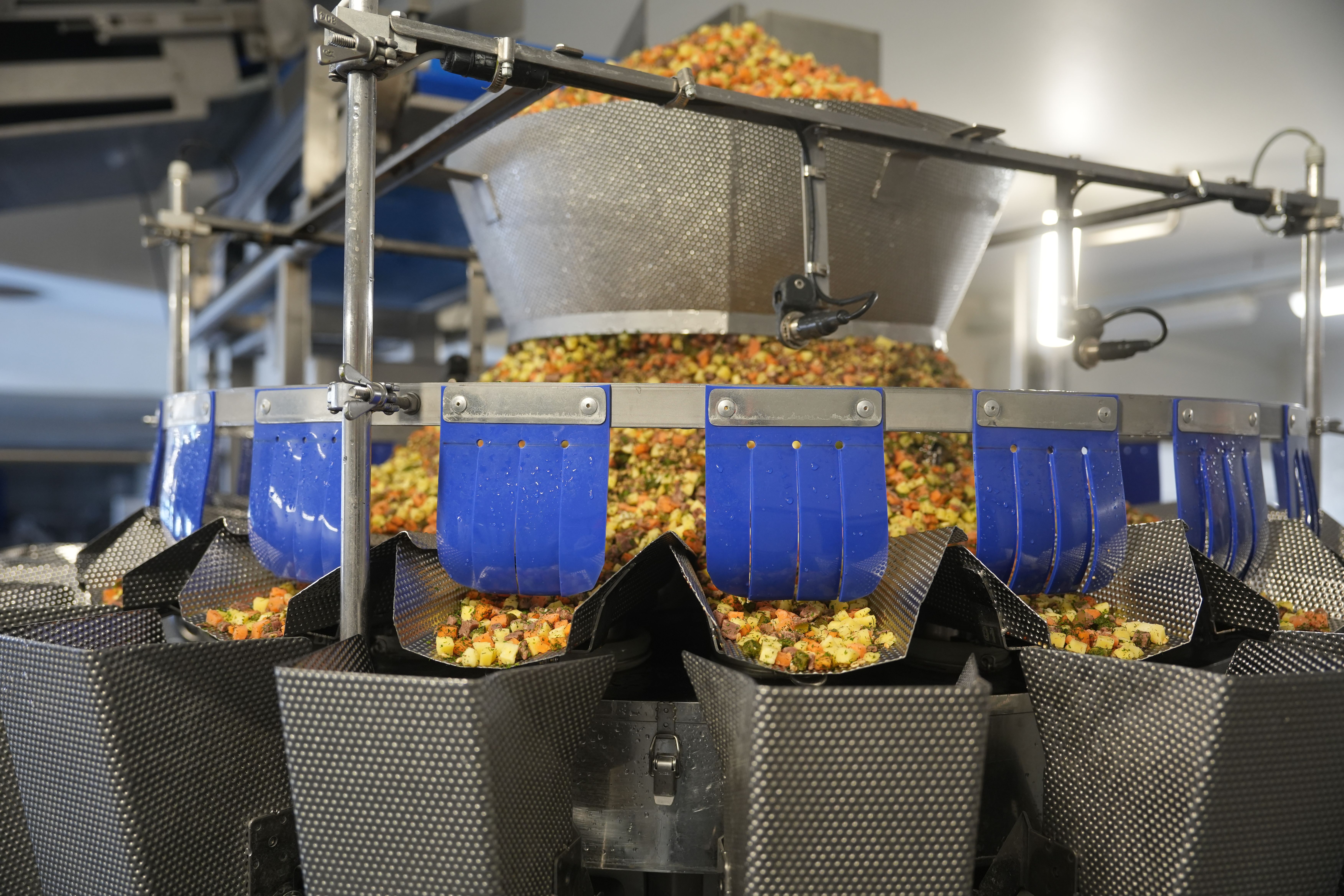
Once accepted, ingredients are prepared according to the recipe for each dish. One of the clearest differences from home cooking emerges during heat treatment. In our own kitchens, we tend to rely on experience and our senses: we taste the food, look at it and decide it is ready. In professional production, cooking times and temperatures are set in advance.
“Few of us use a thermometer to measure the temperature of a dish at home or time precisely how long we cook it. In production, we assess much more. Alongside temperature and cooking time, we check pH, dry matter content, taste, smell and appearance. The product is filled into its packaging only after we have confirmed that it meets all requirements. We cannot decide to cook it a minute longer one day and call it done earlier the next,” says Vainutė.
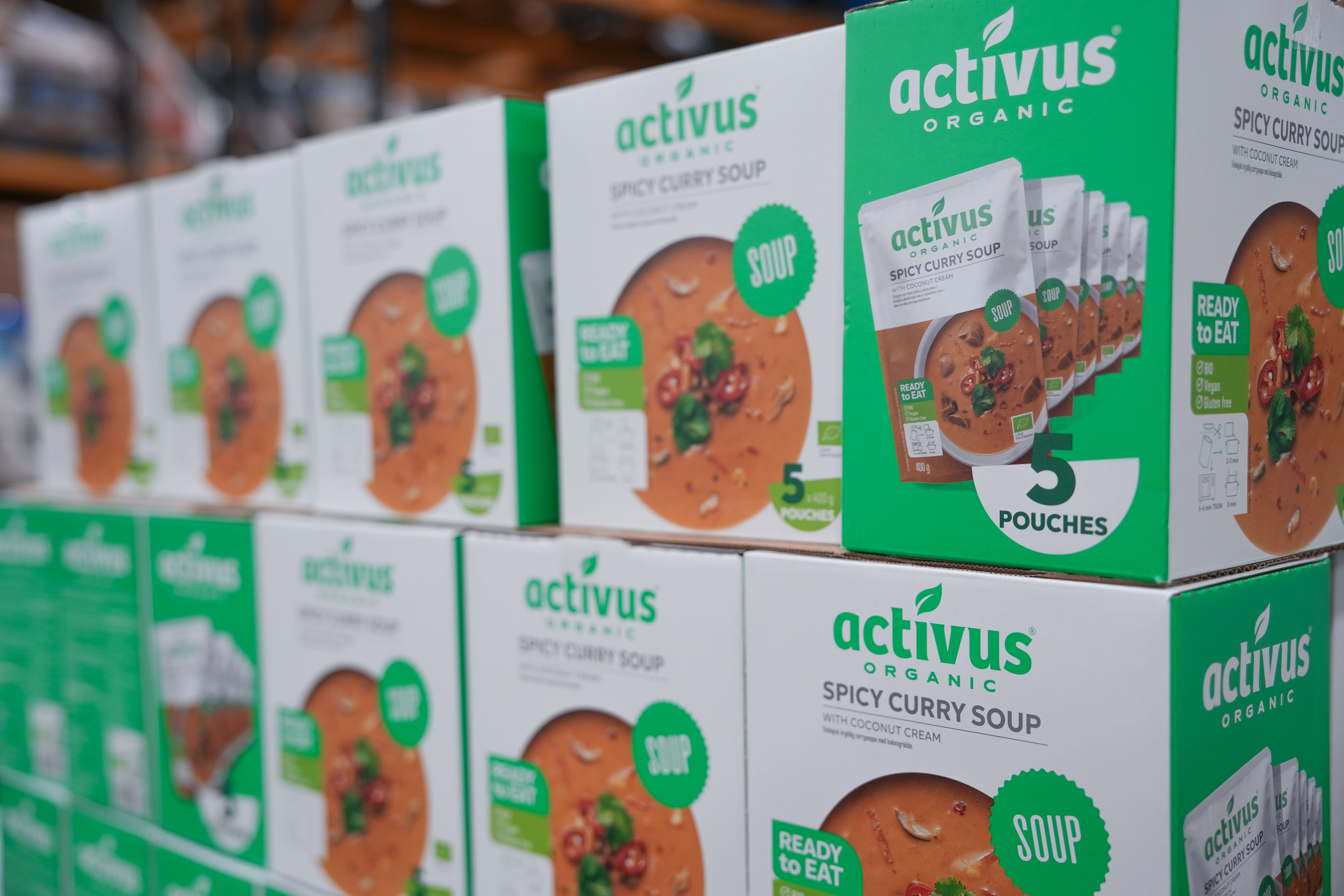
Activus ready-to-eat meals undergo their final heat treatment after the packages have been sealed. The processing time depends on the dish. Vainutė says the aim is to ensure food safety while preserving the meal’s flavour and other qualities.
“We have to make sure the product is safe, but we do not want to keep it at a high temperature for longer than necessary. We want to preserve its flavour, texture, colour and nutritional qualities,” she explains.
Finished does not mean ready to ship
Products do not go straight to retailers when production ends. Samples from every batch are first held under specified conditions for a period of time and tested in the company’s laboratory.
“We do not release a batch without checking it. We carry out microbiological tests and assess the product’s taste, smell, appearance and other characteristics. We can release it to customers only when the laboratory confirms that it meets our requirements,” says Vainutė.
Products are also tested by external laboratories according to a testing plan, providing an additional assessment of their safety and quality.
One package can tell its whole story
Another part of production that consumers rarely see is traceability: the ability to reconstruct a product’s history when needed. The information printed on a package makes it possible to determine precisely when its batch was produced.
“If you brought me a package, I could use its markings to find out when it was made, even down to the production time. We can trace the product back to a specific production cycle. We also retain samples from every batch, so if we receive a complaint or a question arises, we have a sample we can examine further,” says Vainutė.
The ingredients and packaging used in production are traceable too. This means the company can return to a particular batch and review its production history if necessary.
Packages are squeezed and drop-tested
Because each meal receives its final heat treatment inside a sealed package, the integrity of that seal is essential. Checks therefore extend beyond the food itself. Packaging must remain intact during production, transport and storage.
“During production, we regularly check that packages are sealed. We squeeze them and look for leaks or other damage. Before introducing new packaging, we also test how well it withstands being dropped from a specified height,” Vainutė explains.
The package must remain sealed as the product makes its way to the consumer, she adds. Damage could affect whether the food remains safe and suitable to eat.
Monitoring continues after the product leaves the factory
Checks do not end when production is complete. Kauno Grūdai retains samples from finished batches and conducts shelf-life studies to monitor products over time.
“We carry out shelf-life studies both in-house and through external laboratories. We need to know that a product remains safe throughout its stated shelf life and retains its flavour, colour and smell. We observe how it changes over that period and whether those qualities are maintained. These studies help us assess both its safety and its quality over the full shelf life,” says Vainutė.